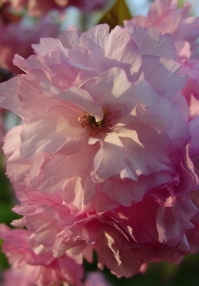
 So much takes place in the contemplative silence of observation.
How does one write of silence? …the silence of the sun setting, which closes the origami day of busy thoughts into curled, wet night? Of the clear pink ruffled petticoat and sweet smell of a cherry blossom in April? Of my aching back which reminds me not so much of all the garden work I’ve done, but of how old I feel?
A visit to family in Bethesda over the weekend allowed my body to relax, and also allowed a virus to infest my system, inspiring further sluggishness. I’ve been feeling like a slug in general these days: Don’t wanna talk, don’t wanna save the world, don’t wanna think. A general rejection of positive decorum burns within me. So I didn’t plan much for my visit. I just wanted to veg.
My sister and I ended up attending a performance of Bach’s Saint Matthew Passion. I wanted to do something to get out of the house. While near the big city, do big city things. The Passion was to be performed, appropriately, on Good Friday. Not being religious, I looked forward mainly to Bach’s glorious music. I had never heard this piece in it’s entirely. It’s very long and involved, basically recounting in detailed musical drama the last week of Jesus’ life. It ended up being a life turning experience for me.
How does one describe how great music kneads one’s emotions into a rum ball which silently melts in the hot breath of a hungry mouth?
The longest of Bach’s works, it fills three hours. This performance was led by Helmuth Rilling, the renowned German scholar and interpreter of Bach’s music. He led impressive forces, including two orchestra’s formed by members of the National Symphony, two choirs, a children’s chorus, and six soloists.
Believe it or not, Rilling conducted the entire performance from memory! Now that’s passion for music. He brought an ethereal lightness from the normally heavy music, yet it did not detract from the somber effect. He held together the large span of its structure by maintaining direction, with very little break between the many sections.
During the performance, an earthly problem added an ironic distraction. A guide dog whimpered a high pitched canine descant throughout most of the performance. It’s owner stubbornly remained, even as many patrons nearby had to leave. One patron finally convinced the owner to leave, perhaps offering to buy her ticket back. Too bad, since this music is rarely performed live.
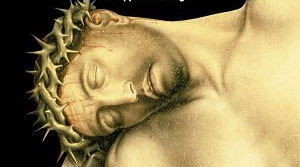 With a hefty head cold brewing in my head, I sat and absorbed this magnificent music, written centuries ago in 1727. With all the text set to music, it alternates between narration, dialog and emotional or poetic impressions. The narration and dialog tell the well known story from over two thousand years ago in a seamless set of scenes.
After each scene, the poetic exposition of its emotions featured the richest music. This is where the text and music appeals to the listener across time and history. As Bach’s music worked its magic, I silently warmed to a compelling message; one of empathy, forgiveness and renewal. I also felt a deep comfort under the mantle of gentle Spirit of this Son of Man, who suffered far more for his innocence than I ever will for my sinfulness.
My spirit unfolded its origami way into a new sheet of uncreased joy.
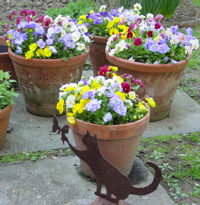 The rest of the weekend was spent enduring the rise and fall of an empire of virus, which blossomed into a full head cold. Nonetheless, beautiful weather inspired some yard work to maintain and ever improve Platinum Glamor’s voluptuous garden.
This time my brother-in-law and I added several new Camellia bushes to replace some rhododendrons which had croaked. There wasn’t much else to do, except prune and clean a bit. My mother’s garden is healthy and vigorous. Each year it fills up and out as it matures. I’ve watched that garden grow for 35 years. Much has come and gone. I love the stories Spring gardens tell of years past, when I remember what used to grow there, or how small that tree was way back when. I’m more aware of time’s passing in Spring. Each dawn urges the garden into a new array, surprising us into noticing.
How does one measure the teaming chorale of Springs quiet vigor as it sprawls out over the abyss of time with such assurance?
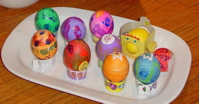 Somewhere in between gardening, shopping and attending the concert we managed to have several wonderful meals, including lamb for Easter dinner. We even dyed some eggs, color therapy to wash away winter grays.
I quietly breathe in these reminders that newness is always at hand, even when I’m feeling sick with an aching back and a sluggish soul.
 The man who created personalities created a multifaceted self. He was a molish kind of man. At least that’s who he saw himself as at the moment. To others he was many things. Musician. Artist. Cook, Lover, Artist, Musician, Husband, Gardener, Egoist, Queen, queen, bottom, top, philosopher, poet, arrogant, self-absorbed, insecure, jerk, stupid, lazy bum, but always with that ever morphing idea of Self.

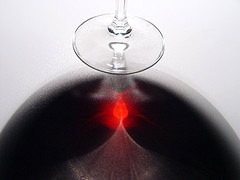 Wine is DEFINITELY alive. Each glass speaks to me, and sings from the lips of a large tulip shaped vessel like Pavarotti from the Met. Each bottle tells a story from beginning to end. Wine shared with friends connects us through its life given between our sipping smiles.
 Back then Australian wines were becoming widely recognized. California was the hot spot for great wine, but it was already overpriced. On the recommendation of my colleague, I bought a bottle of Australian Shiraz for about $8. I was blown away by the first sip.
 It tasted fruity and voluptuous, with a velvety texture. It was thick, almost viscous, with a huge, fruit bomb flavor. I didn’t need to ask the reason for sniffing the wine or swirling it around in one’s mouth. The wine encouraged admiration from every angle. I’ve never forgotten that experience. Beginning with that bottle I formed a connection with an ancient and living tradition.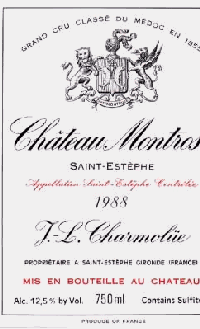
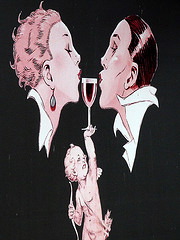 Bordeaux is the original region of masterful wines in the world. They refined the art of making red wine. But it was the British who spurred the world to appreciate great, aged wine. They collected it and cellared it and cultivated the popularity of drinking imported wine. Otherwise the French would have just kept quiet and drunk it all themselves.
 My first sip of the wine melted me. My friends thought I had fainted. It was perfect, at least from the view of my experience. The flavor was complex and subtle, just like the French culture. The mix of grapes, traditional in Bordeaux, formed a unique whole, like a great perfume. It lingered long and evenly on my tongue, opening up as it slid down my throat. It was dry enough to balance the food, certainly much dryer and more subtle than the Shiraz which had started me on this adventure a few years back.