
What Does It Want To Do?

swirl water leavesThe words came into his head. Out of nowhere. Like someone else said them. The voice wasn’t even his, but sounded like someone doing a bad imitation of him; slightly nasal with a raspy piercing deepness.

He lounged on his screened front porch, shielded from the eyes of passersby. Not that he knew any of them, really. Just neighbors. The same faces passed his house regularly, fulfilling the daily routine stamped into their lives, in this case by the dogs they walked. He envied them this regularity, at least from a distance. It gave them the power of rooted steadiness, able to withstand gusts of windy life without falling over.

He, on the other hand, felt more like a pile of leaves, able to take any shape and move with the wind, but having no particular form or solidity. He felt like the foam on top of the waves of change and time. For that reason he liked his name, Dorn. It sounded like a part of a decoration. Just part. Not even his name was complete in itself.

“What does it want to do?” Was the question directed at him or from him? He’d always thought of himself as an object, a human form rather than a unique person. So he could be the “it” in question, like the hamster whose owner asks aloud in its presence what it wants to do. He could imagine the neighbors wondering why he didn’t rake his leaves or mow his grass much. Why did he sleep so late before starting his day? He smiled, imagining himself under observation to learn about the perplexing and perhaps dangerous behavior of slightly deviant humans.

But he’d also approached the whole human race from the same detachment he applied to himself. To his misanthropic thinking, most people had no free will. Certainly not as a group. They did what they had to do to survive, or compete, or follow the group.

How many dared break all the “rules” to be free of them? Most desperately “wanted” to fit in, even if they disagreed with the norm. Wasn’t that the way of the world, to be the best behaved lab rats on the block? Wasn’t modern life a conglomeration of activities born of doing what’s healthy, right, smart, well researched, popular, chic, compassionate or efficient?

People thought it was free will to shop when and for what you wanted. Sure, like it would be free will to snort coke when you “wanted”, or sleep when you’re tired or eat when you’re hungry. No. To him people had about as much free will as cats or birds. Clink their bowl and they come running for more treats. The “It” in question could mean humanity flowing along the luscious and complex Cinerama of cause and effect, survival and conformity. Freedom is an elusive thing.

Thoughts continued to burst like microwave popcorn. Body, mind, systems of language, culture, society, history, chance; all burst with answers to explore. All seemed to operate in systems of their own, with particular patterns of cause and effect, like an IT without will. Letting the scope of the question grow, it now encompassed something beyond humanity and earth. What if “it” in question is the universe. What does IT want to do? Is the universe conscious of doing anything? How can it be? So how can it want to do something?

This thinking began to give an answer, not so much an answer as another kind of question. Why was Dorn able to ask these questions? If all aspects of the universe, from individuals to groups to cosmos, were operating under definable and determinate rules, what did it imply about his ability to wonder at the unanswerable nature of the questions? Gazing with wonder at snow falling, or leaves swirling in a gust of wind, or the peaceful purring of a sleeping cat, or the powerful ephemeral majesty of the setting sun; were those activities just another cog in the wheel of cause and effect?

Sometimes Dorn wanted to do things. Yes, he himself actually wanted to do something, without consideration for their usefulness or conformity. He wanted to sob for hours at the horror of the human race’s continual violence to other creatures, torture, abuse of power, manipulation of lives for personal gain, blind selfishness, pettiness, laziness, destruction of the planet. He included himself in that mass of insidious perfidiousness. He also wanted to hug and kiss anyone he met on the street, to break the ice of distance and normality, to start a new spark of spontaneous love. He wanted to reward with the greatest possible emotion anyone and everyone who struggled to make the world a little better place.

But he was usually paralyzed into doing what’s normal; smile, go about your business, leave the worrying to someone else. Sometimes he wanted to stop doing anything, because so much of “normal” life involved conforming to patterns of tacit destruction and manipulation and evasion of naked truth. He felt trapped, unable to escape his own involvement, his complicity in such a world. How could he fight it without becoming further caught in the vicious cycle? However, these thoughts embarrassed him, because of their wimpiness. He could imagine someone saying, “Get off your ass and do something about it!”

He quickly grew overwhelmed. How could he fathom what the universe wanted to do or how to determine what is truly free will? A fuse burned out in his mind. That often happened to him. He’d break open a huge subject, even with friends, and by the time they had gotten deep into the discussion, he’d poop out, move on, wanting to do something else. He had a feeling it was an escape, a kind of laziness, to give up on the big questions. But what the heck, everyone else did it.

So he finished his last swig of beer. Out of habit, the idea of a walk came to mind. According to numerous studies, walking is good for you, and it passed some time in a way others would accept as normal. So off he went, to be healthy and normal.

That’s what IT wanted to do for now, at least. But the question would haunt him toward further exploration.

Truth and Being

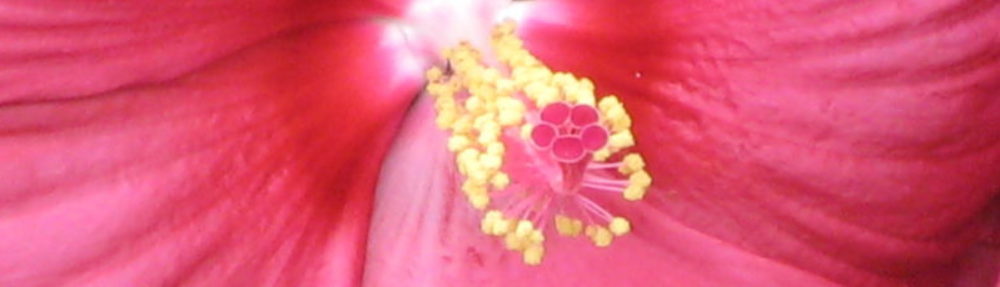
clematis0001.JPGSome thoughts on Truth (reality), Possibility (change) and Being (consciousness).

Possibility (change) is what brings Being (consciousness) to Truth (reality). Possibility keeps open the door to new combinations and patterns within Truth.

Truth guides all possibilities to one present moment, the singularity of which branches out in all directions and encompasses All.

Truth is the track upon which Being unfolds. Possibility is the fuel of Being.

Being is the path Possibility alights along the tracks of Truth.

Truth is the grid, Possibility is the paint, or perhaps film. Being is the story.

The poetry of Being could be said to be its Spirit. The text, syntax and vocabulary of Being is formulated into meaning and beauty by each person. This interpretation and application of meaning and beauty raises humanity above mere existence. Spirit is meaning springing from Possibility.

What Is Spirit To You?

Spirit FlameI just started browsing a little book called “What is Spirit?”, edited by Lexie Brockway Potamkin. It’s a collection of answers to that question by numerous artists, philosophers, shamans, religious leaders, political leaders and common people.

Around the world I’m sure there are as many definitions as grains of sand on the beach. I think it’s an ongoing process for all of us. At the beginning of the book a blank page suggests the reader posit a definition of spirit before continuing. At the end is another blank page. It will be interesting to see if my definition changes after reading the ideas of others.

It’s been awhile since I wrote specifically about spirit. I wrote a long personal article on it months ago, now posted at the top of this blog in the menu bar. I also wrote a short definition for the book, which I posted here. But before you read either of those, go ahead and give me what you’ve got in your head right now.

What is spirit to you?

Not Guilty for Being in Pain

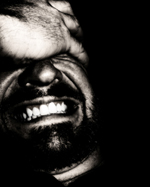
Pain Face, Not GuiltyI am not guilty because I am in pain. I am not a criminal because I want to be pain free.

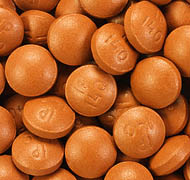
I was released from a central Ohio hospital Thursday after major surgery to my abdomen. The incision is 8 inches long. The morning of the day I left, I still needed intravenous Dilaudid to relieve my pain. By that afternoon, my pain was held in check by 3 Percocets every 5 hours. My body’s tolerance for Percocet is high, since I’ve been on it dozens of times in the past decade.

Pain PillsI had had a horrible week with pain. Monday night about 8 hours after my surgery I was in the most excruciating pain I’ve ever been in. And I’ve had Pancreatitis and Whipples Resection surgery, both extremely painful physical experiences. The surgeon had ordered a very conservative dose of Dilaudid. He increased it only after I was subjected to extreme pain.

As I lay yelling for relief I was told the nurse was busy and would come as soon as she could. When she did arrive, she chuckled at me lying there moaning in pain. I couldn’t believe it. I told her she wouldn’t be laughing if she had my pain. She later apologized, but it highlighted a common problem.

Pain ScreamNurses are trained to care for patients, including treating their pain. They are also trained not to be too attached to the patient’s emotions. It’s difficult to draw the line. This nurse’s lack of compassion for me was her failing, but not the cause of my suffering. The surgeon’s lack of foresight limited her ability to help me.

When I was released, I had to lobby for more than a very frugal dose of pain meds to take home, 20 Percocets total. A few months ago I had another small surgery and was sent home with 40, more than I needed, but plenty to make me comfortable until healed.

But this surgeon apparently believes in “tough love”. Perhaps he also believes that boys who cry are sissies and pain strengthens the spirit. We come from a puritanical culture where pain is something you should endure, that it’s good for character. Even those who supposedly embody the spirit of compassion are not necessarily aligning themselves with the patient’s comfort.

Pain is not god’s messageMother Teresa’s hospitals for the sick and dying were stingy with pain treatment, believing that pain brings you closer to god. I wonder how many died there in agony, wondering if the next life would be so cold to their comfort.

Even my father, while visiting me in the hospital, encouraged me to keep a stiff upper lip and grow from the pain. He said it lightheartedly, but the message was clear. Stop whining. Deal with it!

Perhaps pain can strengthen the spirit, but only if one chooses to be in pain. Athletes who push themselves to painful levels of training are doing so by their own volition. Meditators who endure fire or needles have volunteered. Those suffering from wounds inflicted by a surgeon’s scalpel may have needed the surgery, but they didn’t chose to be in pain.

After loud lobbying for more than “god’s anointed” amount of painkillers, I was sent home with double that amount, 40. The dose was to take 3 every 5 hours as needed for pain.

Pain MedsThat was Thursday afternoon at 5 PM. Through out that evening and night, I was in constant pain. It’s not that I can’t endure some pain. But when pain is so debilitating that I can’t eat, move or breath properly, then it’s interfering with my health and healing, something doctors are supposed to be interested in.

Symptoms got worse that night, which is not unusual. I took the prescribed amount of meds. By Friday afternoon, I realized I may not get through the weekend without running out.

I called the surgeon’s office to let them know. They told me they would not prescribe more and that I should just make them last. “Don’t take so many”, I was told. I was found guilty of being in pain and had dared to ask for compassion. Stiff upper lip! Build character! Seek god in the pain!

Many people abuse pain meds. They are highly addictive and are rightly highly controlled. But as I described in my earlier post on this subject, “Not So Rare Air”, there are a few souls among the “catholic pain purists” who believe compassionate treatment pain is more important than the risk of some addiction.

Those in pain are not criminals who are automatically guilty of addiction until proven innocent. That’s like saying all black men are criminals and all gays are child molesters. I suggest those to stereotypes because many in our society do think that way. It is socially acceptable that this hospital continues to treat every patient as suspect until satisfactory medical “validation” has been provided.

Pain AgonyWhen I arrived in the ER of this same hospital a few weeks ago with what was thought to be gall bladder attack, (another story) I languished in the waiting room for two hours, screaming in pain, until a doctor could treat me. Why doesn’t the hospital have a trained pain technician to make the patient comfortable until the proper doctor can attend? Why didn’t a doctor treat my pain and then return later to diagnose? Why weren‘t more doctors available in the ER?

Perhaps I wasn’t bleeding or retching or showing any sufficient “external” symptoms to validate my illness and my pain. I just “acted” like I was in pain. The nurses who checked on me smirked or acted impatient with my moaning. In this case the patient was guilty until proven innocent.

Here it is Saturday afternoon and I am quickly running out of pain meds. Luckily I didn’t need quite as many last night and today things are going better. But I am already in enough pain to lose my appetite and have difficulty taking a therapeutic walk to heal further. Yet I dare not “overdo” treating my pain. Remember, I am already guilty. I need to “grow” from this pain.

Better meds are needed for treating pain. Science will surely come up with non-narcotic replacements for these troublesome culprits. Toward that goal, my surgeon instructed me to take up to 800 mg of ibuprofen every 6 hours, a huge amount which has apparently been found safe. It has helped take off the edge. Each day my condition improves. I’m not in agony. I also admit that I may not be objective about all this. Pain is a powerful persuader, and so is the built in allure of addictive narcotics.

The point is that I believe I experienced unnecessary suffering because of a cultural and legal system fearful of leniency. If narcotics do the trick, palliate the pain, then treat any problem of addiction, not the other way around.

What do you think?